Basic information about this product
Safety and hazard classification
 GHS02
GHS02
 GHS07
GHS07
Important safety instructions and precautions
Signal Word: Warning
UN No.: 1123
IMCO Class No.: 3
Packing Group: III
Hazardous Statement: H226-H336
Precaution Statement: P261
Detailed information about the product
Product Overview
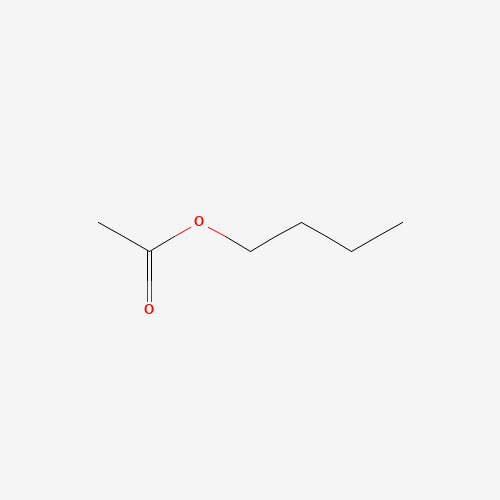
n-Butyl Acetate 99.5% AR (CAS No. 123-86-4) is an analytical-reagent form of the linear acetate ester produced from acetic acid and 1-butanol. Its intermediate polarity and limited water miscibility permit distribution of many organic substances between aqueous and ester-rich phases, making its solvent behaviour relevant to extraction and non-aqueous analytical procedures.
The AR grade is intended for precise analytical work of a general nature where n-butyl acetate is used as a reagent, extraction medium or solution-preparation solvent. The grade designation supports procedures requiring controlled reagent cleanliness and common impurity limits.
Typical Applications
Common Synonyms
Storage Conditions
Keep the container tightly closed and protect the solvent from evaporation, moisture and laboratory contamination. Minimise repeated prolonged opening to preserve analytical cleanliness and prevent changes in composition that could influence reagent blanks or extraction behaviour.