Basic information about this product
Safety and hazard classification
 GHS02
GHS02
 GHS05
GHS05
 GHS07
GHS07
Important safety instructions and precautions
Signal Word: Danger
UN No.: 1120
IMCO Class No.: 3
Packing Group: III
Hazardous Statement: H226-H302-H315-H318-H335-H336
Precaution Statement: P210-P233-P280-P301+P312-P303+P361+P353-P304+P340-P305+P351+P338
Detailed information about the product
Product Overview
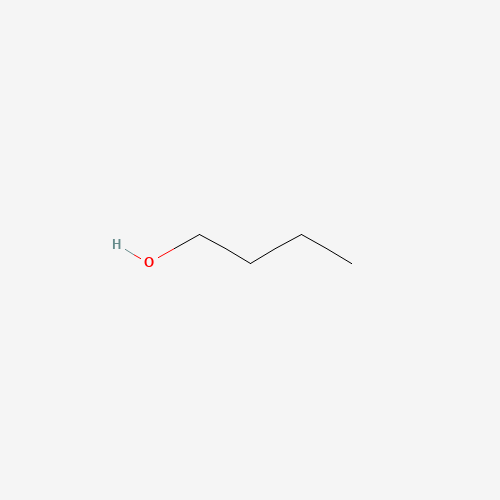
n-Butyl Alcohol 99.9% GC-HS (CAS No. 71-36-3) is the straight-chain primary C4 alcohol commonly known as 1-butanol or n-butanol. Its terminal hydroxyl group confers hydrogen-bonding and moderate polarity, while the four-carbon alkyl chain contributes substantial organic-solvent character. The compound is sufficiently volatile for vapour-phase sampling and is readily determined by gas chromatography, making its phase-partitioning behaviour particularly relevant to headspace analytical procedures. It is chemically distinct from sec-butanol, isobutanol and tert-butanol, which are separate structural isomers.
The GC-HS grade is intended for headspace gas-chromatographic procedures in which volatile background cleanliness and reproducible vapour-phase behaviour are important. 1-Butanol is recognised as a Class 3 residual solvent in pharmaceutical residual-solvent frameworks and is directly measurable by static or dynamic headspace GC methods. The 99.9% GC-HS product is therefore appropriate for preparation of non-certified working solutions, headspace method development, chromatographic evaluation and procedures in which 1-butanol is a target volatile analyte or defined method component.
Typical Applications
Common Synonyms
Storage Conditions
Store tightly closed and protect the product from excessive heat and unnecessary exposure during dispensing to minimise evaporation and changes in composition. Maintain clean handling conditions and promptly reseal the container after use to prevent contamination by foreign volatile substances and preserve its suitability for sensitive GC-HS analysis.