Basic information about this product
Safety and hazard classification
 GHS02
GHS02
 GHS07
GHS07
 GHS08
GHS08
Important safety instructions and precautions
Signal Word: Danger
UN No.: 2056
IMCO Class No.: 3
Packing Group: II
Hazardous Statement: H225-H302-H319-H335-H351
Precaution Statement: P202 - P210 - P233 - P301 + P312 - P304 + P340 - P305 + P351+P338
Detailed information about the product
Product Overview
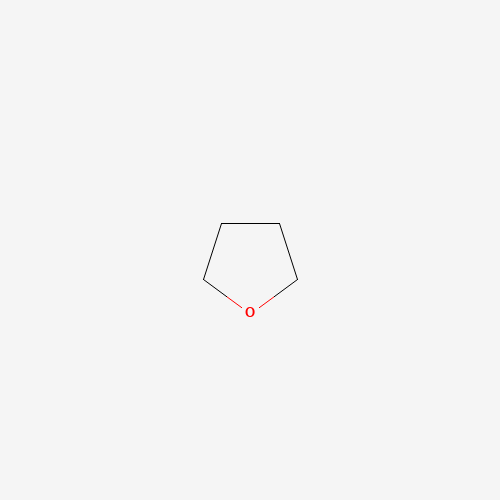
Tetrahydrofuran 99.5% AR (CAS No. 109-99-9) is a polar aprotic cyclic ether used in analytical sample preparation and non-aqueous reagent systems. Its ability to dissolve a broad range of organic compounds and coordinate ionic or metal-containing species makes it useful for extraction, dissolution and method-specific reaction media. THF can form organic peroxides during prolonged exposure to air and light, so solvent age and storage conditions can affect analytical quality.
The AR grade is intended for conventional analytical sample preparation, extraction, dissolution and non-aqueous reagent systems. Its polar ether character makes it useful for method development and laboratory quality-control procedures involving organic and polymeric analytes.
Typical Applications
Common Synonyms
Storage Conditions
Store tightly closed and minimise prolonged exposure to air and strong light to limit evaporation and peroxide formation. Maintain clean analytical handling and consider peroxide formation when aged solvent is concentrated or reused.