Basic information about this product
Safety and hazard classification
 GHS02
GHS02
 GHS07
GHS07
 GHS08
GHS08
Important safety instructions and precautions
Signal Word: Danger
UN No.: 2056
IMCO Class No.: 3
Packing Group: II
Hazardous Statement: H225-H302-H319-H335-H351
Precaution Statement: P202 - P210 - P233 - P301 + P312 - P304 + P340 - P305 + P351+P338
Detailed information about the product
Product Overview
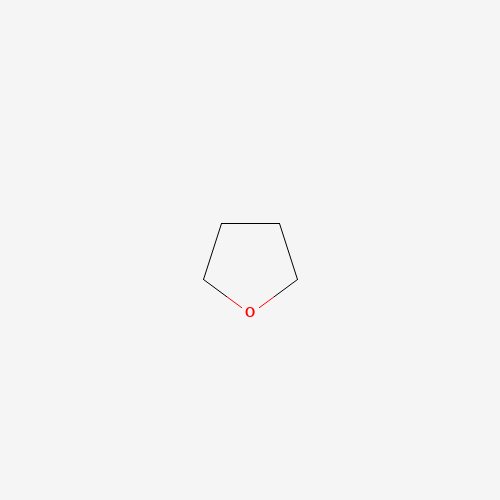
Tetrahydrofuran 99.5% Extra Pure (CAS No. 109-99-9) is oxolane, a five-membered cyclic ether used as a polar aprotic and Lewis-basic organic solvent. The ether oxygen can coordinate metal centres and cations, making THF particularly useful in organometallic and strongly polar reaction systems. On prolonged exposure to air and light, tetrahydrofuran can form peroxide species, an important aspect of preserving aged solvent composition.
The Extra Pure grade is intended for general organic synthesis, extraction, polymer research and reaction-medium applications requiring a polar aprotic ether solvent. Its ability to solvate a broad range of organic compounds and selected organometallic species makes it useful across preparative chemistry.
Typical Applications
Common Synonyms
Storage Conditions
Keep tightly closed and minimise prolonged exposure to air and strong light to limit evaporation and peroxide formation during storage. Do not infer stabiliser protection from the grade; preserve solvent cleanliness and avoid unnecessary concentration of aged material without appropriate peroxide consideration.